3. A village
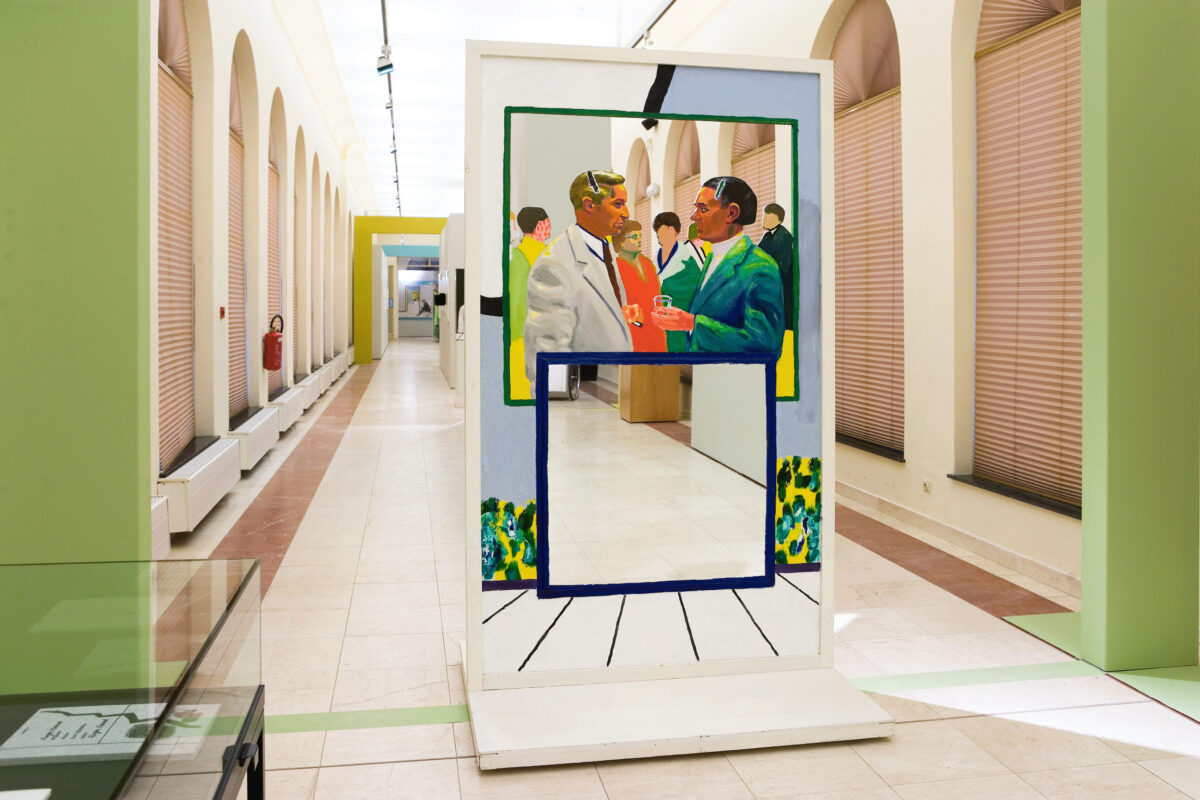
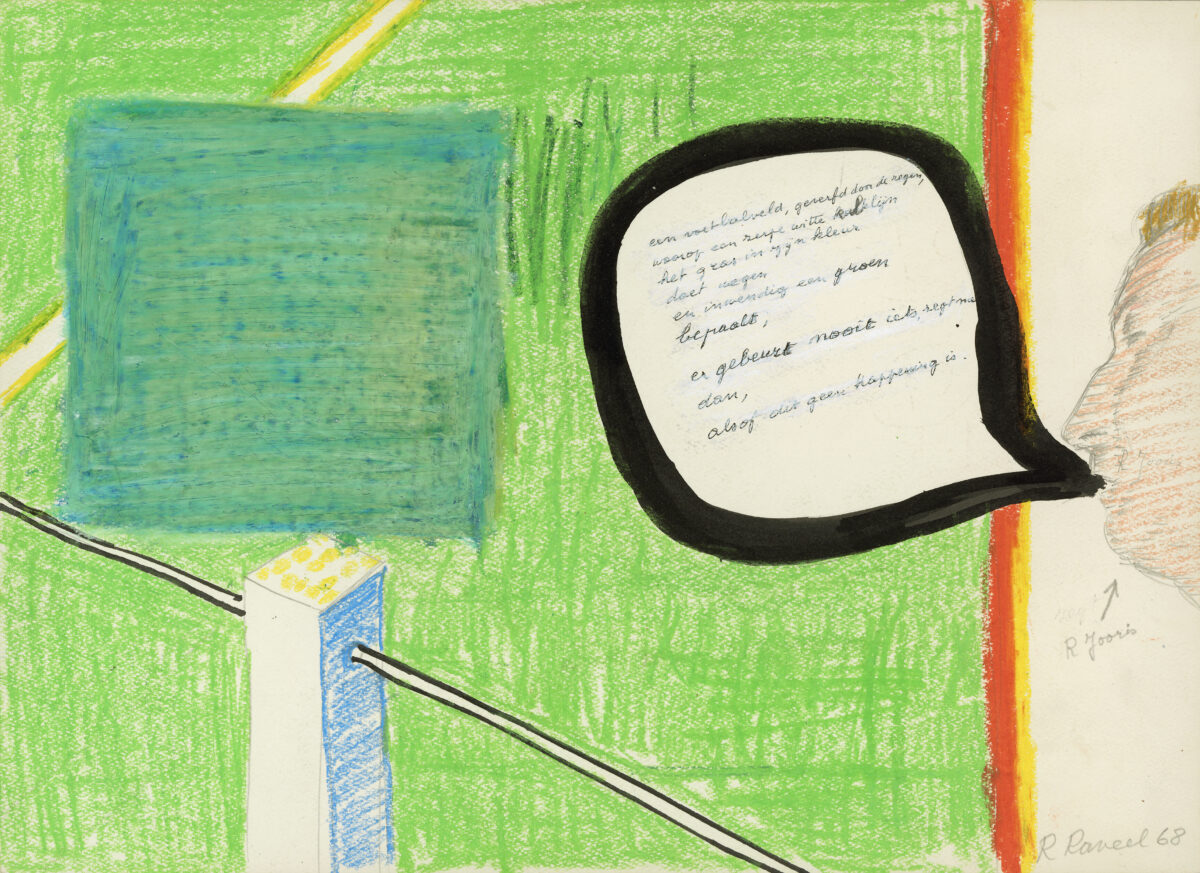
When you turn the corner, you can read a poem by Roland Jooris on the back of the wall. This poet and art critic played a major role in Roger Raveel's life, as a friend and as the most important critic of his work.
In 1957, Jooris saw Raveel's paintings for the first time at the Kunst- en Letterenkring (Art and Literature Circle) in Ghent. ‘I was transfixed; I had never seen paintings like these before,’ he said. Six years later, he visited Raveel's studio and they got to know each other personally.
This marked the beginning of a decades-long friendship, collaboration and mutual appreciation. Jooris wrote regularly about Raveel's work and coined the term “New Vision” for it. Characteristic of this New Vision is an analytical view of the environment and an attempt in painting to allow art to flow into reality – and, conversely, to bring reality into art. This refers to the intense connection between art and life, but also to the integration of abstract, geometric elements into figurative work. The term also applies to the work of painters such as Raoul De Keyser, Etienne Elias and Reinier Lucassen.
Roland Jooris was appointed by Raveel as the first curator of the Raveel Museum and held this position from 1999 to 2005.
The first verses of the poem Een dorp (A village) establish the connection between the reality of the village and abstract geometry, just as Raveel does in his work.
Click above and listen to Roland Jooris reading the poem in Dutch.
Een dorp
een dorp is een cirkel
met de hand rond een
kerk getrokken;
een duif is een zeer
eenvoudige luchtledige
lijn op een dak;
een voorjaar maakt natte
vlekken op het papier
van de lucht;
en kijk, dit is pas
werkelijkheid: straks
laat ik het regenen
op mijn gedicht
zodat het uitvloeit
tot een akwarel
van doordrenkte,
onleesbare woorden.
A village
a village is a circle
drawn by hand around a
church;
a pigeon is a very
simple empty line
on a roof;
spring makes wet
spots on the paper
of the sky;
and look, this is what
reality is: soon
I will let it rain
on my poem
so that it flows
into a watercolour
of soaked,
illegible words.
(liberal translation)